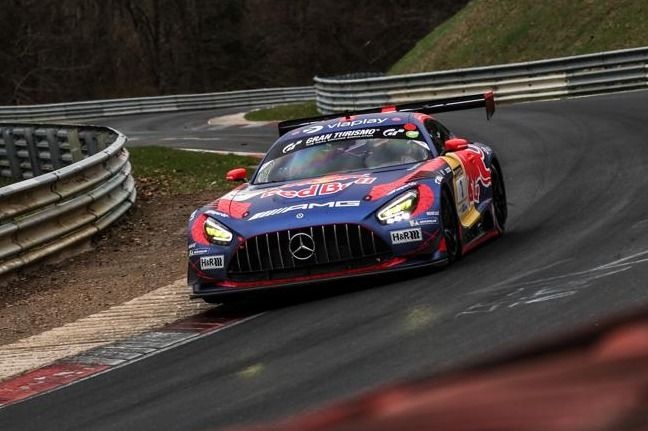
The Nürburgring Nordschleife, often dubbed "The Green Hell," is a legendary circuit known for its unforgiving nature and incredible challenges. It's a place where motorsport legends are forged and, occasionally, where unexpected dramas unfold. Such was the case during the highly anticipated NLS2 event, the opening round of the 2026 Nürburgring Langstrecken-Serie (NLS) season, which saw Formula 1 superstar Max Verstappen return to endurance racing. What began as a dominant performance for Verstappen and his team, securing pole position and a race victory, quickly turned into a stunning disqualification that left fans and competitors alike buzzing.
This article delves into the full story of Max Verstappen’s NLS2 outing, from his blistering pace to the controversial post-race decision, and what it means for his burgeoning GT racing career. For those who followed the race in real-time or wish to stay updated on future NLS events, understanding the role of NLS2 Live Timing becomes paramount in unraveling the intricacies of endurance racing.
The Green Hell Beckons: NLS2 as the Season Opener
The Nürburgring Langstrecken-Serie (NLS), formerly known as the VLN, represents the pinnacle of endurance racing on the iconic Nordschleife. Comprising a series of four-hour races, it tests drivers, teams, and machinery to their absolute limits over the 25.378-kilometer combined Nordschleife and short Grand Prix circuit. The 2026 season was poised for an exciting start, with the 58th ADAC Barbarossa Prize scheduled for Saturday, March 21. Originally designated as NLS2 due to the cancellation of the season's first round (NLS1) because of challenging weather conditions, this event officially kicked off the championship.
For many teams, the NLS serves as a crucial testing ground and preparation platform for the ultimate endurance challenge: the 24 Hours of Nürburgring. For Max Verstappen and his newly rebranded Mercedes-AMG Team Verstappen Racing, this NLS2 race held particular significance. The team, fresh off a name change and transitioning to formidable Mercedes machinery, was embarking on a strategic campaign to prepare for their ambitious entry into the pro class of the 2026 GT World Challenge Europe. Participating in the NLS allowed them to gather invaluable data, fine-tune their new Mercedes-AMG GT3 EVO, and gain vital experience on one of the world's most demanding race tracks.
The entry list for this highly anticipated race was robust, featuring 136 cars ready to tackle the Nordschleife, including a competitive field of GT3s. Fans were eagerly awaiting to see how the F1 world champion would fare against the Nordschleife specialists and seasoned endurance racers.
Verstappen's Dominant Display: From Pole to Provisional Victory
Max Verstappen's return to the Nürburgring Nordschleife was nothing short of spectacular, reaffirming his versatility and blistering speed across different racing disciplines. Piloting the striking No.3 Mercedes-AMG Team Verstappen Racing AMG GT3 EVO, Verstappen was joined by a formidable line-up of experienced GT drivers: Daniel Juncadella and Jules Gounon. This trio represented a potent blend of raw talent and endurance racing prowess.
The team wasted no time in asserting their dominance during the qualifying session. Verstappen himself put in a staggering lap, setting the fastest time of 7:51.751 around the challenging circuit. This incredible performance secured pole position, placing the Mercedes-AMG Team Verstappen Racing machine at the very front of the grid for the 58th ADAC Barbarossa Prize. Such a lap time on the Nordschleife is a testament to the driver's skill and the car's setup, especially considering the competitive nature of the GT3 field.
As the four-hour race got underway at 12:00 CET, the team continued their impressive form. The strategic pit stops, driver changes, and consistent pace throughout the event saw them maintain their lead against strong competition. Verstappen, Juncadella, and Gounon flawlessly executed their roles, pushing the Mercedes-AMG GT3 EVO to its limits. After four grueling hours of racing, the No.3 Mercedes-AMG Team Verstappen Racing car crossed the finish line in first place, claiming what appeared to be a resounding victory in the opening round of the 2026 NLS season. The celebrations were undoubtedly well-deserved, marking a triumphant debut for the team's new machinery and a strong statement of intent for their GT racing ambitions.
The Disqualification: A Shocking Turn of Events
The jubilation for Max Verstappen, Daniel Juncadella, Jules Gounon, and the entire Mercedes-AMG Team Verstappen Racing was, unfortunately, short-lived. Following the impressive victory, a post-race technical inspection or procedural review led to a dramatic and unexpected turn of events. While the specific grounds for the disqualification were not immediately detailed in public reports, it was confirmed that the No.3 Mercedes-AMG GT3 EVO was stripped of its hard-fought victory. This meant that despite their on-track dominance, the official race results would not reflect their win.
Disqualifications in motorsport, especially at such a high-profile level and involving a driver of Verstappen's stature, always generate significant discussion. They can stem from a variety of reasons, including technical infringements (e.g., car not meeting regulatory specifications in terms of weight, dimensions, fuel flow, or specific component legality), sporting penalties (e.g., unsafe pit release, exceeding track limits too many times without penalty, or a procedural error during the race), or even driver conduct issues. Without official clarification on the precise nature of the infringement for the NLS2 event, speculation can be rife. However, the decision by the race stewards is final, and it fundamentally altered the outcome of the 58th ADAC Barbarossa Prize.
The impact of such a disqualification extends beyond just the loss of a trophy. It affects championship points, potentially reorders the podium finishers, and can be a significant setback for a team's morale and momentum, particularly one embarking on a new program like Mercedes-AMG Team Verstappen Racing. For the teams that finished behind them, the disqualification likely elevated their positions, with the second-place finisher being promoted to the top step of the podium. This incident underscores the strict adherence to rules and regulations that govern motorsport at every level, emphasizing that performance alone isn't enough; compliance is equally critical.
Beyond the Track: Verstappen's GT Racing Ambitions and Future Implications
While the NLS2 disqualification was undoubtedly a disappointing outcome, it's crucial to view it within the broader context of Max Verstappen's and Mercedes-AMG Team Verstappen Racing's long-term goals. For Verstappen, GT racing and endurance events are not merely a hobby but a serious venture that complements his unparalleled success in Formula 1. His participation in events like the NLS is a strategic move, serving as vital preparation for grander challenges, most notably the 24 Hours of Nürburgring and his team's intended entry into the pro class of the 2026 GT World Challenge Europe.
Despite the post-race penalty, the NLS2 event provided immense value. The team showcased incredible pace, securing pole position with a record-setting lap and demonstrating the competitive potential of their new Mercedes-AMG GT3 EVO. For a team transitioning to new machinery and aiming for top-tier GT racing, gathering data on car performance, tire degradation, pit stop strategies, and driver synergy on a track as demanding as the Nordschleife is invaluable. Every lap, every stint, every pit entry and exit provides crucial insights, regardless of the final classification.
This experience, even with the disqualification, acts as a significant learning curve. It highlights areas for improvement, not just in car setup and driver performance but also in administrative and technical compliance. Such lessons are integral to building a championship-winning endurance racing program. Verstappen's dedication to this project signals his serious intent to leave his mark on the world of GT racing, just as he has in F1. Fans can expect to see him and his team back on track, applying these lessons and pushing harder than ever in their pursuit of endurance racing glory.
How to Follow NLS Action: Nls2 Live Timing and More
For motorsport enthusiasts who want to follow the drama and excitement of the Nürburgring Langstrecken-Serie, there are several excellent ways to stay informed and catch all the action, whether it's the NLS2 or any other round of the championship. Staying connected is key, especially when events unfold as dramatically as Verstappen's NLS2 outing.
- Official Live Streams: The NLS often provides official live streams of their races, typically available on their official YouTube channel. These streams usually offer professional commentary, multiple camera angles, and a comprehensive broadcast of the entire four-hour race, including qualifying sessions.
- Dedicated Motorsport News Sites: Many motorsport news outlets, like GPFans (as mentioned in the context), also provide their own embedded streams or live coverage, ensuring fans don't miss a moment.
- NLS2 Live Timing: This is arguably the most critical tool for the dedicated fan. The official NLS website typically provides robust NLS2 Nürburgring Live Timing data. This platform allows you to track every car on the circuit in real-time, displaying lap times, sector times, current positions, pit stop statuses, and driver changes. It's the ultimate way to understand race strategy as it unfolds, identify leaders, and monitor your favorite drivers' progress. For a race like the NLS2 where Verstappen was competing, following his car's onboard feed and comparing it with Nls2 Live Timing provides an unparalleled viewing experience.
- Onboard Feeds: Complementing the live timing, many teams, including high-profile entries like Mercedes-AMG Team Verstappen Racing, offer dedicated onboard camera feeds. These provide a raw, immersive perspective from inside the cockpit, allowing you to experience the Nordschleife from a driver's point of view – a truly breathtaking experience.
By combining the official live stream with constant monitoring of the Nls2 Live Timing, fans can gain a comprehensive understanding of the race dynamics, strategy shifts, and critical incidents as they happen.
Conclusion
Max Verstappen's NLS2 outing was a rollercoaster of emotions, showcasing the thrilling highs and unexpected lows that define endurance racing on the Nürburgring Nordschleife. From a dominant pole position and a provisional victory to a post-race disqualification, the 58th ADAC Barbarossa Prize delivered drama in spades. While the official result was a setback, the event provided crucial data and experience for Mercedes-AMG Team Verstappen Racing as they gear up for the 2026 GT World Challenge Europe and the formidable 24 Hours of Nürburgring. For fans, it was a potent reminder of why motorsport's "Green Hell" remains one of the most captivating arenas in the world, where every moment counts, and every rule is strictly enforced. As Verstappen continues his journey in GT racing, all eyes will undoubtedly remain on his progress, easily trackable through comprehensive Nls2 Live Timing and live broadcast coverage.